


Call Us
+86-18158514197
Email Us
zhaoyingjie@grandind.com
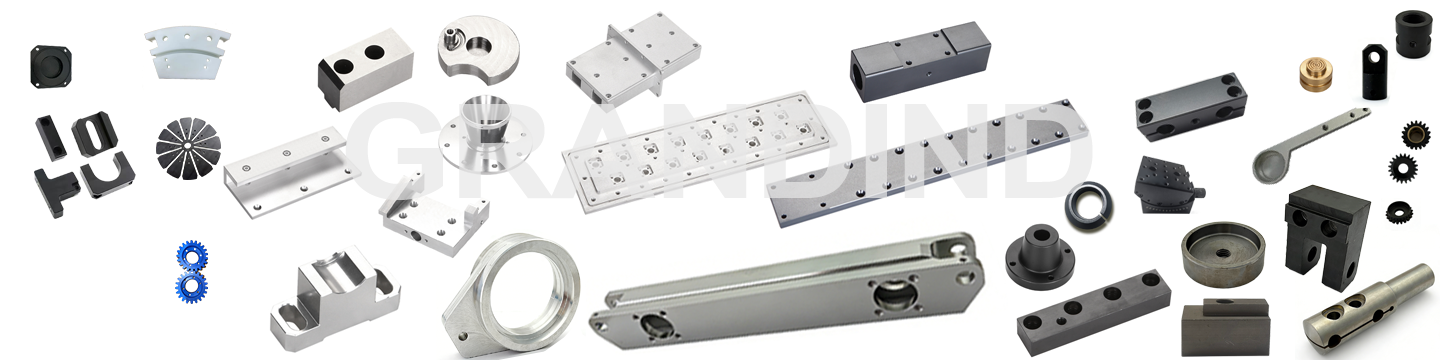
Practical Application Case: High-Precision Aluminum Alloy Fixing Bracket (GI-CNC-AL-001) Improves Equipment Positioning Accuracy for Automation Clients
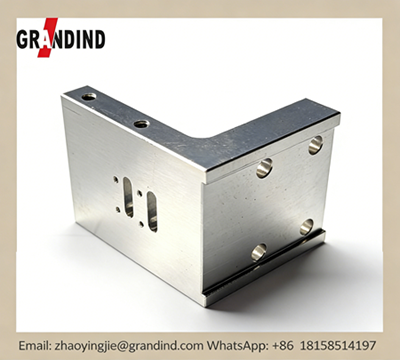
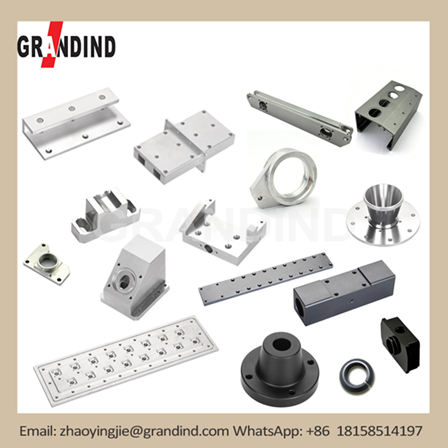
GRANDIND® shares a practical application case of Aluminum Alloy Fixing Bracket, focusing on the core precision indicators—precision, center degree and perpendicularity—that determine product performance. All content is based on real custom machining processes, precision testing data and client on-site usage feedback, providing practical references for industrial clients who need high-precision fixing components to solve equipment positioning deviation problems.The cooperating client is an industrial automation equipment manufacturer, mainly producing automated assembly lines and precision testing equipment. In late December 2025, the client contacted GRANDIND® with urgent needs: the original fixing bracket used in the client’s automated assembly line had poor precision, unstable center degree and unqualified perpendicularity, leading to frequent positioning deviation of equipment components during operation, equipment shutdowns and increased production scrap rate. The client emphasized that the new custom Aluminum Alloy Fixing Bracket must meet strict precision requirements, as the bracket’s precision directly determines the stability of the entire equipment.After receiving the client’s consultation and detailed drawings, GRANDIND®’s precision machining team first confirmed the core precision requirements of the Aluminum Alloy Fixing Bracket: the overall dimensional precision tolerance must be controlled within ±0.01mm, the center degree of the mounting holes must not exceed 0.005mm, and the perpendicularity between the mounting surface and the bracket body must be within 0.008mm. These indicators are the key to solving the client’s positioning deviation problem, and GRANDIND®’s team fully aligned with the client’s requirements, without any additional R&D design, only focusing on precision control during custom machining.In the custom machining process of the Aluminum Alloy Fixing Bracket (Model: GI-CNC-AL-001), GRANDIND® adopted advanced 4-axis CNC milling and drilling equipment, which can achieve high-precision machining of complex structures. Before machining, the team calibrated the equipment repeatedly to ensure the machine’s own precision meets the requirements, avoiding precision errors caused by equipment deviation. During the machining of the Aluminum Alloy Fixing Bracket, each step was monitored in real time, especially the processing of mounting holes and positioning surfaces, which are directly related to center degree and perpendicularity.To ensure the center degree of the Aluminum Alloy Fixing Bracket, GRANDIND®’s technical team adopted a one-time clamping machining process for the mounting holes, avoiding precision errors caused by repeated clamping. The team used high-precision positioning tools to fix the aluminum alloy blank, ensuring the blank’s position is accurate, so that the center of the mounting holes is completely consistent with the client’s drawing requirements. After the hole machining is completed, a professional coordinate measuring machine is used to detect the center degree, and any unqualified Aluminum Alloy Fixing Bracket is directly eliminated, without entering the next process.In terms of perpendicularity control of the Aluminum Alloy Fixing Bracket, the team optimized the machining sequence, first processing the base surface of the Aluminum Alloy Fixing Bracket to ensure the base surface is flat and smooth, then using the base surface as the reference to process the mounting surface, ensuring the perpendicularity between the two surfaces meets the client’s requirements. After machining, a perpendicularity detector is used to conduct 100% inspection, and the data of each Aluminum Alloy Fixing Bracket is recorded for traceability, ensuring that every product delivered meets the precision standard.The overall dimensional precision of the Aluminum Alloy Fixing Bracket is controlled through strict process management. The team pre-sets the machining parameters according to the client’s drawings, and conducts real-time dimensional detection during the machining process. Once any deviation is found, the parameters are adjusted immediately to ensure the final dimensional precision of the Aluminum Alloy Fixing Bracket is within the required range. In addition, the Aluminum Alloy Fixing Bracket undergoes surface treatment after machining, which does not affect the precision of the product, ensuring the surface finish while maintaining the center degree and perpendicularity.Every Aluminum Alloy Fixing Bracket is inspected one by one before delivery, including dimensional precision, center degree, perpendicularity and surface quality, with a pass rate of 100%. In mid-January 2026, GRANDIND® delivered the first batch of 80 sets of Aluminum Alloy Fixing Bracket to the client, and arranged technical personnel to carry precision testing tools to the client’s workshop for on-site verification, confirming that all precision indicators of the Aluminum Alloy Fixing Bracket fully meet the client’s requirements.GRANDIND®’s technical team tracked the usage of the Aluminum Alloy Fixing Bracket for 6 months (January to June 2026), and the actual application effect was remarkable. The Aluminum Alloy Fixing Bracket maintained stable precision during long-term continuous operation, the center degree and perpendicularity did not change, and the client’s equipment positioning deviation problem was completely solved. The equipment shutdown time caused by positioning deviation was reduced by 95%, and the production scrap rate was reduced by 80%, greatly improving the client’s production efficiency.The client’s equipment maintenance manager said: “The Aluminum Alloy Fixing Bracket provided by GRANDIND® has extremely high precision, and the center degree and perpendicularity are very stable. After replacement, our equipment runs more smoothly, and the positioning accuracy has been significantly improved. GRANDIND®’s custom machining ability in precision control is very professional, which fully meets our requirements.”For industrial clients who need custom Aluminum Alloy Fixing Bracket or other precision machining parts, the core requirement is often the control of precision, center degree and perpendicularity. GRANDIND® has rich experience in custom precision machining, and can strictly follow client drawings and precision requirements, controlling every link of the machining process to ensure the final product meets the client’s actual application needs. Clients can view more precision machining cases and product details on GRANDIND®’s official [CNC Machined Aluminum Parts](https://www.grand-precisionindustry.com/categories/cnc-machined-aluminum-parts) category page.As an ISO9001 certified manufacturer with 20 years of precision machining experience, GRANDIND® focuses on custom machining services, and does not carry out unnecessary R&D design. All products are produced according to client drawings and requirements, with a focus on precision control. The factory has advanced CNC machining equipment and a professional precision testing team, which can provide flexible customization services for clients, supporting small-batch prototype orders and large-volume mass production. All Aluminum Alloy Fixing Bracket products are produced in strict accordance with precision standards, ensuring stable performance and reliable quality, and have been widely recognized by global industrial clients.
view our website: www.grand-precisionindustry.comContact us: Rita
Phone/WhatsAPP: +86 18158514197
Email for quote: zhaoyingjie@grandind.com
Send Inquiry


X
We use cookies to offer you a better browsing experience, analyze site traffic and personalize content. By using this site, you agree to our use of cookies.
Privacy Policy
News
 GRANDIND Launches New CNC Machined Steel Ball Head Stud GI-CNC-ST-0112026/06/05
On June 05, 2026, Hangzhou, China, GRANDIND rolls out GI-CNC-ST-011 steel ball head stud, a new precision turned component developed for swing linkage and ball joint assembling. This new steel part is independently processed in our factory, supporting personalized OEM and ODM customization to satisf......
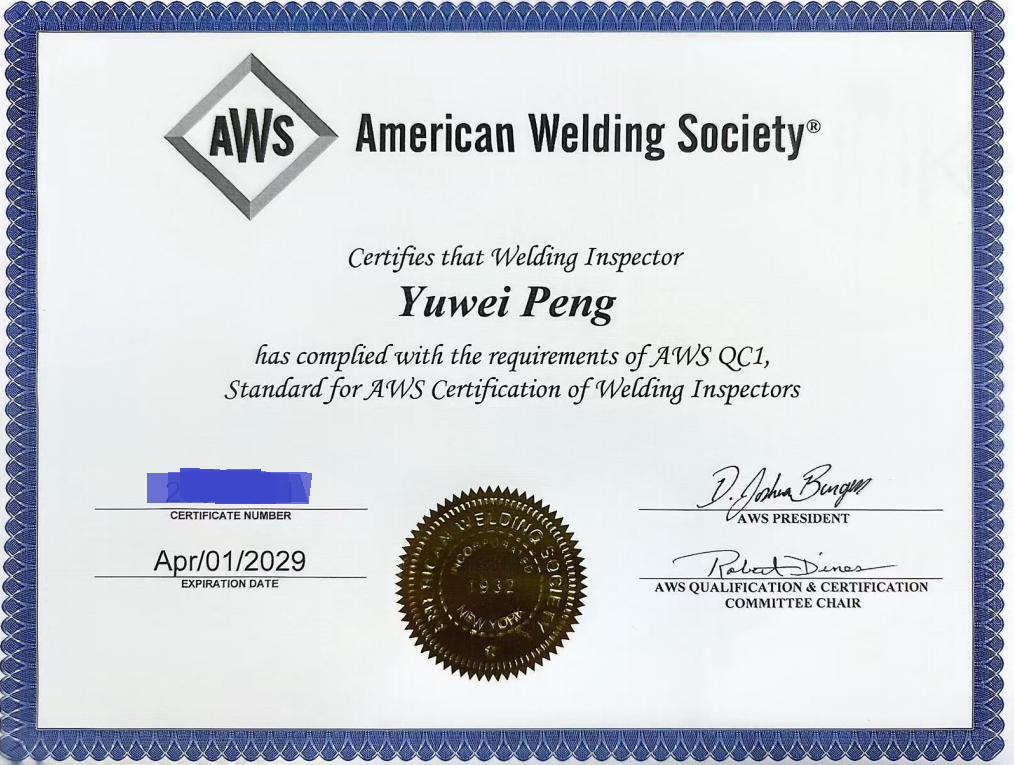 GRANDIND Earns AWS Certified Visual Welding Inspection Qualification | Certified Factory QC2026/06/03
June 04, 2026, Hangzhou, China — GRANDIND, a professional OEM & ODM precision CNC machining and metal assembly manufacturer with over 20 years of factory production experience, has obtained AWS (American Welding Society) visual welding inspection qualification. Supported by our certified senior tech......