


Call Us
+86-18158514197
Email Us
zhaoyingjie@grandind.com
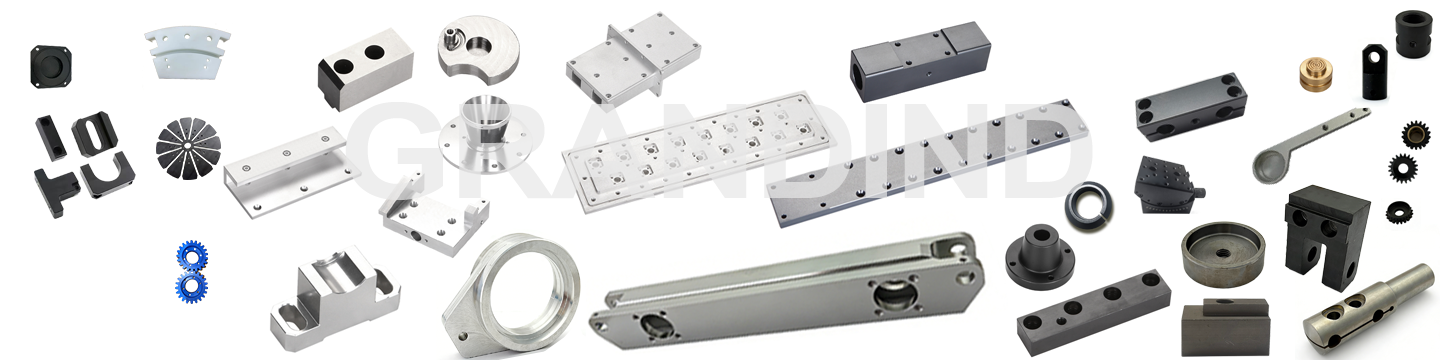
What Tolerances Does GI-CNC-AL-003 CNC Precision Aluminum Mechanical Arm Guarantee?
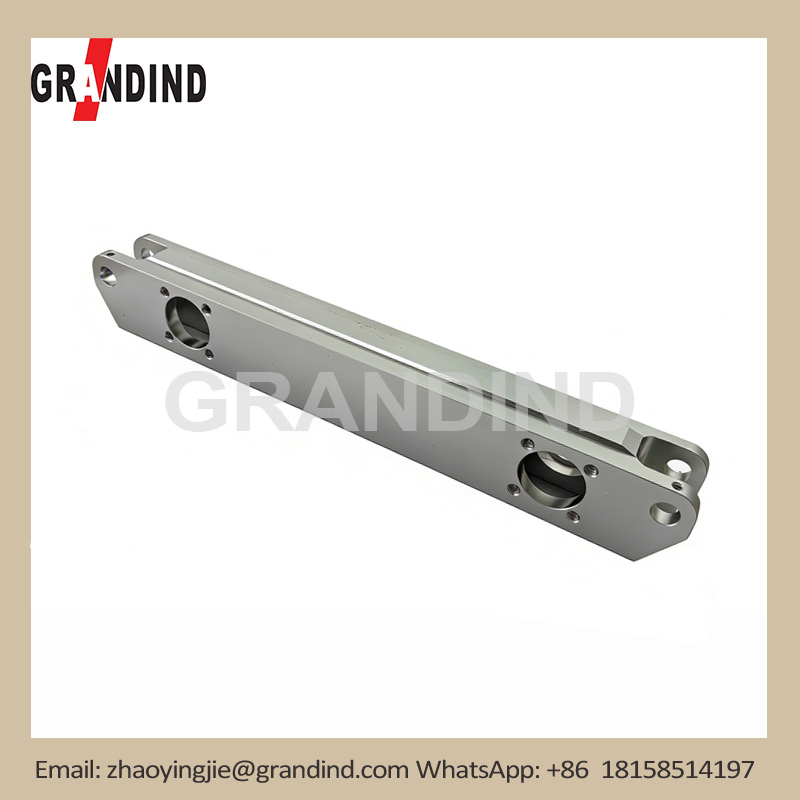
GRANDIND manufactures CNC Precision Aluminum Mechanical Arm which has attracted attention in industrial automation projects due to its focus on dimensional consistency, structural stability, and repeatable machining quality. When precision determines whether an automated system runs smoothly or suffers unexpected downtime, component tolerances become a critical topic.
Across robotics, packaging systems, semiconductor equipment, and industrial automation lines, engineers are increasingly evaluating how machining tolerances influence assembly efficiency, maintenance frequency, and overall equipment performance.
The Hidden Cost of Poor Tolerance Control
Many equipment operators focus primarily on material selection while overlooking machining precision.
However, real-world experience shows that tolerance inconsistency can create costs that far exceed the value of the component itself.
Assembly Delays
When dimensions vary significantly between parts, technicians may spend additional time performing:
- Rework
- Alignment adjustments
- Manual fitting
- Troubleshooting
These activities increase project timelines and labor costs.
Reduced Equipment Accuracy
Industrial automation systems rely heavily on positional accuracy.
Minor deviations in critical structural components can gradually affect:
- Robot trajectory accuracy
- Sensor alignment
- Motion repeatability
- Product quality consistency
Accelerated Wear
Improper fits can generate uneven loads.
Over time, this may contribute to:
- Bearing wear
- Shaft damage
- Fastener loosening
- Structural fatigue
Maintaining strict tolerance control helps minimize these risks.
How Advanced CNC Milling Supports Precision
One reason the GI-CNC-AL-003 CNC Precision Aluminum Mechanical Armreceives attention in automation applications is its use of advanced CNC machining processes.
Modern multi-axis machining technology enables complex geometries to be produced in a single setup or reduced number of setups.
Benefits include:
Improved Positional Accuracy - Fewer repositioning operations help reduce cumulative errors.
Better Surface Consistency - Stable machining parameters contribute to smoother surfaces and improved dimensional control.
Enhanced Repeatability - Once machining programs are optimized, multiple parts can be produced with highly consistent results.
For automation projects that require interchangeable components, repeatability often becomes as important as absolute accuracy.
Why Tolerance Matters More Than Many People Think
In modern machinery, every component functions as part of a larger system. Even a small dimensional variation can create alignment issues, vibration, excessive wear, or installation difficulties.
Consider a robotic arm assembly. If mounting holes are slightly offset or bearing bores deviate beyond specification, the result may be:
- Reduced motion accuracy
- Increased friction
- Higher maintenance requirements
- Unexpected equipment stoppages
- Shortened service life of connected components
This is why tolerance control is often viewed as one of the most important indicators of machining quality.
For structural components such as the CNC Precision Aluminum Mechanical Arm, precision is not merely about achieving a target dimension—it is about ensuring every produced part performs consistently throughout its operational life.
Understanding the GI-CNC-AL-003 Design Philosophy
The GI-CNC-AL-003 model is designed for applications where lightweight construction and structural rigidity must coexist.
Manufactured from 6061 aluminum alloy, the component combines:
- High strength-to-weight ratio
- Excellent machinability
- Good corrosion resistance
- Reliable dimensional stability
- Long-term structural performance
The use of advanced CNC milling technology allows critical features to be machined with a high degree of accuracy while maintaining repeatability across production batches.
Key Structural Features
The component typically includes:
- Precision mounting holes
- Bearing installation bores
- Slot structures
- Connection surfaces
- Complex contours
Each feature contributes to overall system alignment and mechanical performance.
As automation systems become increasingly sophisticated, maintaining precise relationships between these features becomes essential.
What Tolerances Does GI-CNC-AL-003 Typically Guarantee?
Tolerance requirements vary according to customer drawings and application demands. However, the machining process is designed to support tight dimensional control for critical features.
The following table provides a general overview of tolerance capabilities commonly associated with CNC Precision Aluminum Mechanical Arm components.
| Feature Type | Typical Control Objective |
| Overall Dimensions | Consistent dimensional repeatability |
| Mounting Holes | Accurate positional alignment |
| Bearing Bores | Precise fit and concentricity |
| Flat Surfaces | Controlled flatness |
| Parallel Surfaces | Stable parallelism |
| Slot Structures | Accurate width and depth control |
| Assembly Interfaces | Reliable mating performance |
Actual tolerances are determined according to customer drawings, functional requirements, and application conditions.
For projects involving robotics or automated machinery, tighter tolerance requirements can often be accommodated through customized machining processes and inspection procedures.
Flatness and Parallelism: Two Overlooked Performance Factors
Many discussions about precision focus only on dimensional measurements.
Yet flatness and parallelism often play an equally important role.
Imagine a mounting surface that appears dimensionally correct but contains slight distortions.
Possible consequences include:
- Uneven load distribution
- Stress concentration
- Installation difficulties
- Vibration during operation
The GI-CNC-AL-003 production process emphasizes verification of mating surfaces to help ensure stable assembly performance.
This is especially important in robotic systems where dynamic movement places continuous loads on structural components.
Tolerance control remains one of the most important factors influencing the performance, reliability, and longevity of automation equipment. By combining 6061 aluminum alloy, advanced CNC machining, controlled anodizing processes, and comprehensive inspection procedures, the GI-CNC-AL-003 CNC Precision Aluminum Mechanical Arm addresses common industry concerns related to dimensional stability and assembly accuracy. As industrial automation continues to advance, precision-focused components such as the Aluminum Mechanical Arm from GRANDIND are expected to play an increasingly important role in supporting efficient and dependable machinery systems.
Send Inquiry


X
We use cookies to offer you a better browsing experience, analyze site traffic and personalize content. By using this site, you agree to our use of cookies.
Privacy Policy
News
 GRANDIND Launches New CNC Machined Steel Ball Head Stud GI-CNC-ST-0112026/06/05
On June 05, 2026, Hangzhou, China, GRANDIND rolls out GI-CNC-ST-011 steel ball head stud, a new precision turned component developed for swing linkage and ball joint assembling. This new steel part is independently processed in our factory, supporting personalized OEM and ODM customization to satisf......
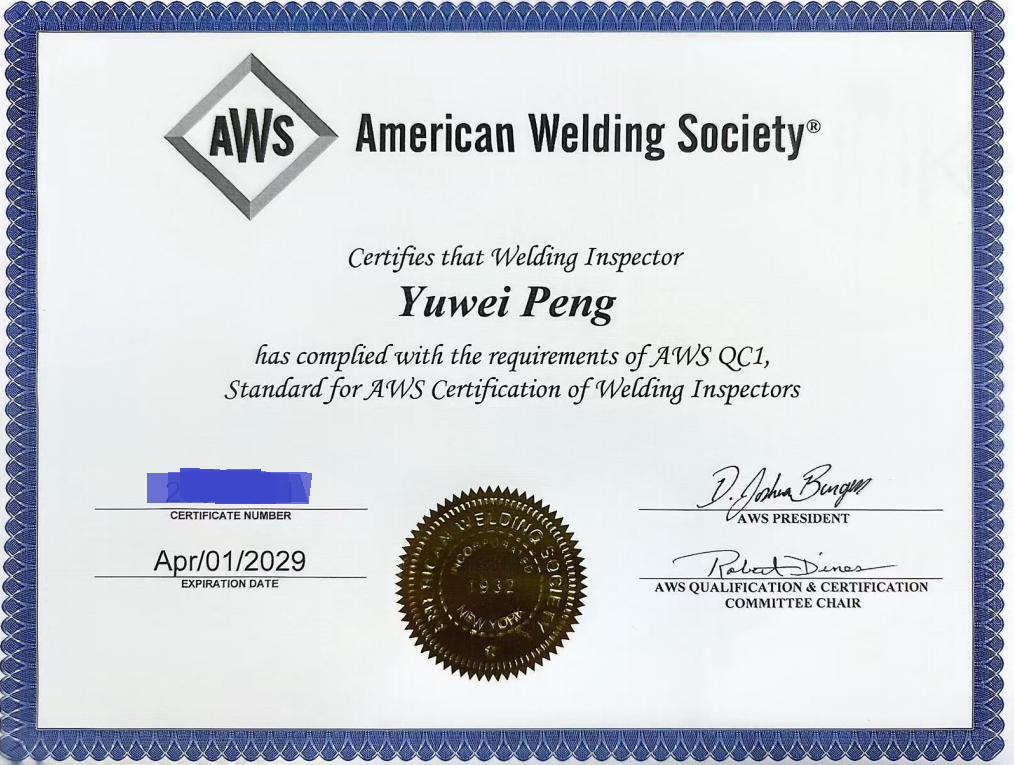 GRANDIND Earns AWS Certified Visual Welding Inspection Qualification | Certified Factory QC2026/06/03
June 04, 2026, Hangzhou, China — GRANDIND, a professional OEM & ODM precision CNC machining and metal assembly manufacturer with over 20 years of factory production experience, has obtained AWS (American Welding Society) visual welding inspection qualification. Supported by our certified senior tech......