


Call Us
+86-18158514197
Email Us
zhaoyingjie@grandind.com
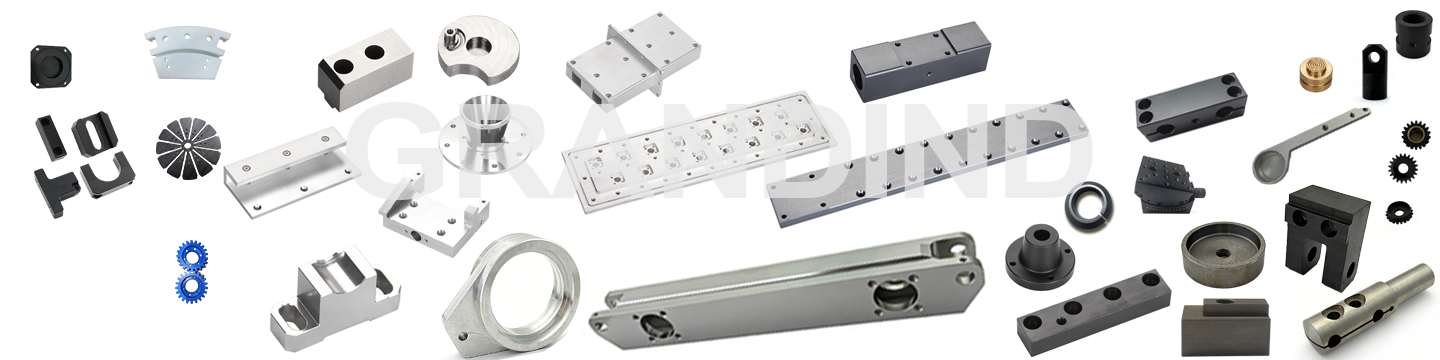
Why Choose CNC Machined Aluminum Blue Anodized Components?
Article Summary
A CNC machined aluminum blue anodized component is produced through computer-controlled machining and a subsequent anodizing process that creates a protective oxide layer on the aluminum surface. This combination offers several advantages, including accurate geometry, improved corrosion resistance, enhanced surface hardness compared with untreated aluminum, and a distinctive blue appearance. This article explains the manufacturing process, material selection, anodizing considerations, quality control requirements, application scenarios, and sourcing factors that buyers should evaluate before placing an order.
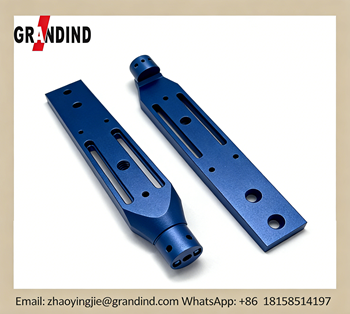
Table of Contents
- Understanding CNC Machined Aluminum Blue Anodized Components
- Why CNC Machining Is Essential for Precision Aluminum Parts
- How the Blue Anodizing Process Works
- Key Advantages of Blue Anodized Aluminum Components
- Choosing the Right Aluminum Alloy
- Important Manufacturing and Design Considerations
- Quality Control and Inspection Requirements
- Common Industrial Applications
- How to Select a Reliable CNC Machining Supplier
- Common Problems and Practical Solutions
- Frequently Asked Questions
- Conclusion: Getting More Value from Precision Aluminum Parts
Article Outline
- Product fundamentals and the relationship between machining and anodizing.
- Precision machining capabilities and surface finishing principles.
- Material selection, component design, and production considerations.
- Inspection methods, industrial uses, and supplier evaluation.
- Practical answers to common sourcing and engineering questions.
1. Understanding CNC Machined Aluminum Blue Anodized Components
A CNC machined aluminum blue anodized component is a precision-manufactured aluminum part that receives a blue anodized surface finish after machining. CNC stands for Computer Numerical Control, a manufacturing method in which programmed instructions control cutting tools to produce components with specified dimensions and geometries.
Unlike conventional manual machining, CNC machining can produce complex shapes with repeatable accuracy. It is particularly useful for components containing holes, slots, threads, pockets, curved surfaces, and precisely positioned mounting features.
After machining, the aluminum component undergoes anodizing. This electrochemical process converts the natural aluminum surface into an aluminum oxide layer. A suitable dye can then introduce a blue color before the pores are sealed.
The finished component combines two important characteristics:
- Functional precision: CNC machining produces the required dimensions, geometries, and assembly features.
- Surface performance: Anodizing improves surface protection and provides a decorative finish.
For manufacturers and industrial buyers, this combination is valuable when components must fit accurately into assemblies while maintaining a professional and consistent appearance.
2. Why CNC Machining Is Essential for Precision Aluminum Parts
Precision is one of the most important requirements when purchasing custom aluminum components. Even a small dimensional deviation can affect assembly, alignment, sealing, or mechanical movement.
2.1 Accurate Dimensional Control
CNC machining uses programmed tool paths and controlled cutting parameters to manufacture components according to engineering drawings. Depending on the machine, material, geometry, tooling, and inspection requirements, manufacturers can achieve tight dimensional tolerances for critical features.
This is particularly important for:
- Precision mounting holes and threaded connections.
- Components requiring accurate alignment.
- Mechanical interfaces and mating surfaces.
- Custom housings and equipment brackets.
- Parts used in automated production equipment.
2.2 Repeatability in Batch Production
Industrial buyers often require multiple components with consistent dimensions. CNC programs allow manufacturers to reproduce established machining operations, reducing variation between production batches when machines, tooling, materials, and process controls are properly maintained.
2.3 Flexible Customization
Different industrial projects may require unique shapes, dimensions, hole patterns, and surface treatments. CNC machining supports customized production without the need for dedicated forming dies for every component.
Customers can provide CAD drawings, 3D models, or technical specifications to communicate their requirements. Manufacturers can then evaluate machining feasibility and recommend appropriate production methods.
2.4 Efficient Material Processing
Aluminum is relatively lightweight and generally offers good machinability. Its material characteristics make it suitable for CNC milling, turning, drilling, and other subtractive manufacturing operations.
Purchasing Tip: Do not evaluate machining accuracy based only on a supplier's advertised tolerance. Ask which dimensions are critical, how they are measured, and whether the supplier can provide inspection records for important features.
3. How the Blue Anodizing Process Works
Blue anodizing is a surface treatment process that creates a controlled oxide layer on aluminum. The color is generally introduced through a dyeing stage rather than being an inherent color of the aluminum material.
A typical production workflow includes several stages.
3.1 Surface Preparation
Before anodizing, the machined component must be cleaned to remove cutting fluids, oils, dust, and other contaminants. Depending on the desired appearance, the surface may also undergo mechanical finishing, polishing, or chemical treatment.
Proper preparation is essential because scratches, machining marks, and surface contamination can remain visible after anodizing.
3.2 Chemical Treatment and Etching
The component may undergo chemical etching or other pretreatment processes to achieve a more uniform surface condition. The exact treatment depends on the aluminum alloy and the requested finish.
3.3 Electrochemical Anodizing
During anodizing, the aluminum part acts as an anode in an electrolytic solution. An electrical current promotes the formation of an aluminum oxide layer on its surface.
This oxide layer is integrated with the aluminum substrate rather than simply applied as a conventional paint coating.
3.4 Blue Dyeing
After anodizing, the porous oxide layer can absorb suitable dyes. Blue dye is introduced to produce the requested color. The final shade may vary depending on alloy composition, pretreatment, oxide-layer characteristics, dye formulation, and processing conditions.
3.5 Sealing and Final Inspection
The anodized pores are sealed to improve the finish's resistance to staining and corrosion. The component is then inspected for color consistency, surface defects, and compliance with the agreed specifications.
| Manufacturing Stage | Main Purpose | Important Control Point |
|---|---|---|
| Surface cleaning | Remove oils and contaminants | Cleanliness and surface condition |
| Pretreatment | Prepare a uniform surface | Etching and appearance consistency |
| Anodizing | Form an oxide layer | Process parameters and coating thickness |
| Blue dyeing | Create the required appearance | Color matching and uniformity |
| Sealing | Close the oxide-layer pores | Sealing quality |
| Final inspection | Verify finished component quality | Dimensions, color, and surface defects |
4. Key Advantages of Blue Anodized Aluminum Components
Choosing a blue anodized aluminum component can offer several practical benefits for industrial applications. However, the final performance depends on the alloy, anodizing specification, component design, and operating environment.
4.1 Improved Corrosion Resistance
The anodized oxide layer provides additional protection against environmental exposure. This can help reduce surface deterioration caused by moisture and certain corrosive conditions.
For equipment used in industrial environments, this protection can contribute to longer-lasting surface appearance and reduced maintenance requirements.
It is important to select the appropriate anodizing process for the intended environment. Standard decorative anodizing and hard anodizing are not interchangeable in every application.
4.2 Enhanced Surface Hardness
Aluminum itself is relatively soft compared with many engineering metals. Anodizing produces a harder surface oxide layer that can improve resistance to surface wear and abrasion.
For applications involving repeated handling or moderate surface contact, this characteristic can be beneficial. Nevertheless, anodizing does not transform the entire aluminum component into a hardened structural material.
4.3 Attractive and Professional Appearance
Blue anodizing provides a clean and recognizable appearance. It can help manufacturers distinguish product models, identify assembly groups, or maintain consistent brand styling across equipment components.
For visible components, a uniform finish can also improve the perceived quality of the finished equipment.
4.4 Lightweight Construction
Aluminum has a relatively low density compared with steel. Using machined aluminum components can therefore help reduce overall equipment weight while maintaining the required mechanical properties through appropriate design.
4.5 Long-Term Surface Protection
Because anodizing creates an oxide layer from the aluminum surface, it is not simply a decorative film that can peel away like conventional paint. The finish can provide lasting surface protection when the process is properly controlled and the component is used within its design limits.
5. Choosing the Right Aluminum Alloy
Material selection directly affects machining performance, anodized appearance, mechanical properties, and total manufacturing cost.
Not every aluminum alloy produces the same anodizing results. Different alloying elements can influence color uniformity, surface appearance, corrosion behavior, and the characteristics of the anodized layer.
| Aluminum Alloy | General Characteristics | Potential Applications | Anodizing Considerations |
|---|---|---|---|
| 6061 | Good machinability, strength, and corrosion resistance | Brackets, housings, structural components | Common choice for general anodized components |
| 6063 | Good surface finish and extrusion characteristics | Decorative and architectural components | Often suitable for attractive anodized finishes |
| 5052 | Good corrosion resistance and formability | Panels and sheet-based components | Machining suitability depends on part geometry |
| 7075 | High strength and good strength-to-weight ratio | High-strength mechanical components | Appearance and corrosion requirements need careful evaluation |
How Should Buyers Make the Decision?
Instead of choosing an alloy based only on its price or strength rating, consider the following questions:
- What mechanical loads will the component experience?
- Does the part require high dimensional stability?
- Will the component be exposed to moisture or chemicals?
- Is a consistent blue appearance essential?
- Will the component undergo additional assembly or surface processing?
For general precision machining projects, 6061 aluminum is frequently considered because of its balanced combination of machinability, strength, and corrosion resistance. However, the final alloy should always be selected according to the component's engineering requirements.
6. Important Manufacturing and Design Considerations
A high-quality CNC machined aluminum blue anodized component begins with a practical design. Poorly considered features can increase machining time, complicate anodizing, and create unnecessary production costs.
6.1 Wall Thickness and Structural Design
Extremely thin walls can deform during machining because of cutting forces, clamping pressure, and material stress. Designers should consider the component's dimensions, structural requirements, and machining sequence when specifying wall thickness.
6.2 Hole and Thread Requirements
Threaded holes, precision bores, and mating surfaces require special attention because anodizing changes the dimensions of the original machined surface.
The oxide layer grows partly into and partly outward from the aluminum substrate. Consequently, critical dimensions may change after treatment. Manufacturers should establish whether holes, threads, and mating features require masking, post-anodizing machining, or dimensional compensation.
6.3 Color Matching
Blue anodized finishes can vary in shade between different alloys and production batches. Buyers who require consistent color should provide a physical reference sample or a clearly defined color specification.
It is also useful to approve a sample before authorizing mass production, particularly when components will be installed next to other visible anodized parts.
6.4 Surface Roughness
The anodizing process does not automatically eliminate machining marks. The original surface condition can remain visible after treatment, depending on the pretreatment and anodizing process.
Therefore, surface roughness requirements should be discussed before manufacturing begins.
6.5 Masking and Contact Areas
Some components contain electrical contact areas, grounding surfaces, or precision mating features that should not receive anodizing. These areas may require masking during surface treatment.
Design Recommendation: Identify critical dimensions, masking areas, thread requirements, color references, and surface roughness specifications directly on the engineering drawing. This reduces communication errors and helps avoid expensive rework.
7. Quality Control and Inspection Requirements
Quality control is essential because a component can look attractive while still failing to meet its functional requirements. A reliable manufacturing process should evaluate both the machined substrate and the final anodized surface.
7.1 Dimensional Inspection
Dimensional inspection verifies that the component meets the engineering drawing. Depending on the required accuracy, inspection equipment may include:
- Digital calipers and micrometers.
- Height gauges and bore gauges.
- Coordinate Measuring Machines (CMM).
- Thread gauges and specialized fixtures.
7.2 Anodizing Thickness Measurement
Coating thickness can be measured using suitable non-destructive instruments. The required thickness should be established according to the applicable anodizing specification and intended operating environment.
7.3 Color and Appearance Inspection
Visual inspection helps identify uneven coloration, scratches, stains, burns, and other visible defects. For projects requiring consistent appearance, controlled lighting and approved color samples can improve inspection reliability.
7.4 Surface Quality Inspection
Inspectors should check for machining defects, burrs, dents, contamination, and unacceptable surface roughness. The acceptance criteria should be agreed upon before production.
7.5 Material Verification
For projects with specific material requirements, buyers may request material certificates or other traceability documentation. This helps verify that the supplied alloy matches the approved specification.
| Inspection Item | Purpose | Typical Inspection Method |
|---|---|---|
| Dimensions | Confirm drawing compliance | Calipers, micrometers, CMM |
| Surface thickness | Verify anodizing requirements | Coating thickness gauge |
| Color consistency | Check visual uniformity | Visual comparison or color measurement |
| Surface appearance | Identify visible defects | Visual inspection |
| Material composition | Verify material specification | Material certificates or suitable testing |
8. Common Industrial Applications
CNC machined blue anodized aluminum components are suitable for various industries that require lightweight structures, precision dimensions, and attractive surface finishes.
8.1 Automation Equipment
Automated machinery frequently uses aluminum brackets, mounting plates, housings, and positioning components. Precision machining supports accurate assembly, while anodizing provides additional surface protection.
8.2 Electronics and Electrical Equipment
Aluminum housings and mounting components are commonly used in electronic equipment. Blue anodizing can provide a distinctive appearance and surface protection. Electrical contact areas may require masking because anodized aluminum oxide is electrically insulating.
8.3 Medical Equipment
Some medical and laboratory equipment uses precision aluminum components for housings, support structures, and mechanical assemblies. Material selection and surface treatment should be based on the equipment's cleaning, environmental, and regulatory requirements.
8.4 Automotive and Transportation
Machined aluminum parts can be used in non-critical housings, mounting brackets, control assemblies, and customized equipment. The combination of low weight and corrosion-resistant surface treatment can be beneficial in suitable applications.
8.5 Industrial Instruments
Measurement instruments and testing equipment may require accurately machined aluminum housings, adjustment components, and structural supports. Anodized finishes can improve appearance while providing additional surface protection.
9. How to Select a Reliable CNC Machining Supplier
Choosing a supplier is not simply about comparing unit prices. A dependable manufacturing partner should understand technical requirements, maintain stable production processes, and communicate clearly throughout the project.
9.1 Evaluate Machining Capabilities
Ask about available CNC milling and turning equipment, machining dimensions, tooling capabilities, and experience with comparable components.
A supplier should be able to assess whether the requested geometry and tolerances are achievable using the proposed production process.
9.2 Confirm Surface Treatment Experience
Because anodizing quality directly affects the final appearance and performance, buyers should confirm whether the supplier manages anodizing internally or works with qualified surface treatment partners.
Ask how color samples are approved and how batch-to-batch consistency is controlled.
9.3 Review Quality Management Procedures
Ask about inspection equipment, material traceability, production records, and the handling of nonconforming products. Relevant quality certifications may also be considered, but they should be verified rather than assumed.
9.4 Request Samples
A prototype or pre-production sample allows buyers to evaluate dimensions, assembly compatibility, surface finish, and color before committing to larger quantities.
9.5 Compare the Complete Quotation
A competitive quotation should clearly explain the following:
- Aluminum alloy and material condition.
- Machining operations and dimensional tolerances.
- Anodizing type, thickness, and blue color requirements.
- Inspection and documentation requirements.
- Packaging, delivery time, and order quantity.
When comparing suppliers, buyers should consider total project cost rather than focusing exclusively on the lowest quoted unit price. Rework, inconsistent finishes, delivery delays, and rejected batches can create significantly higher costs later.
10. Common Problems and Practical Solutions
Understanding potential manufacturing problems helps buyers communicate more effectively with suppliers and reduce the risk of quality disputes.
| Common Problem | Possible Cause | Recommended Solution |
|---|---|---|
| Uneven blue color | Alloy variation, pretreatment differences, dyeing conditions | Approve samples and control processing parameters |
| Dimensional deviation | Machining variation or anodizing growth | Account for coating growth and inspect critical features |
| Visible scratches | Handling damage or poor surface preparation | Improve handling, packaging, and pretreatment |
| Thread assembly difficulty | Coating buildup in threaded areas | Specify masking or dimensional compensation |
| Surface stains | Contamination or inconsistent cleaning | Improve cleaning and final inspection |
| Excessive production cost | Unnecessary tight tolerances or complex geometry | Review design requirements and machining feasibility |
Most of these issues can be reduced through early technical communication, realistic specifications, approved reference samples, and consistent inspection procedures.
11. Frequently Asked Questions
Q1: What is a CNC machined aluminum blue anodized component?
It is an aluminum part manufactured using computer-controlled machining processes and subsequently treated with blue anodizing. It combines precise component geometry with an oxide surface layer that provides additional protection and a colored appearance.
Q2: Does blue anodizing improve aluminum corrosion resistance?
Yes. Anodizing creates an aluminum oxide layer that generally improves corrosion resistance compared with untreated aluminum. Actual performance depends on alloy selection, anodizing type, coating thickness, sealing quality, and environmental exposure.
Q3: Can blue anodized aluminum components be customized?
Yes. Manufacturers can customize dimensions, shapes, holes, threads, surface finishes, and other features according to customer drawings and specifications. Blue color requirements can also be discussed through reference samples and agreed acceptance criteria.
Q4: Which aluminum alloy is suitable for blue anodizing?
6061 and 6063 are commonly considered for anodized aluminum applications. However, the best alloy depends on mechanical requirements, machining conditions, corrosion exposure, and desired appearance. Alloy selection should be confirmed before production.
Q5: Does anodizing affect component dimensions?
Yes. Anodizing causes oxide-layer growth, with part of the layer extending beyond the original aluminum surface. This can affect precision holes, threads, and mating dimensions. Critical features should be reviewed during the design and manufacturing stages.
Q6: Can the blue color remain consistent across different batches?
Consistent color can be achieved through controlled materials, pretreatment, anodizing, dyeing, and sealing processes. However, exact shade consistency can be challenging across different alloys or batches. Approved samples and defined color acceptance criteria are recommended.
Q7: Is blue anodized aluminum suitable for outdoor applications?
It can be suitable for many outdoor applications because anodizing improves surface corrosion resistance. The required anodizing specification should be selected according to exposure conditions, including humidity, UV exposure, pollutants, and potential chemical contact.
Q8: What information should buyers provide when requesting a quotation?
Buyers should provide 2D engineering drawings or 3D models, material requirements, critical tolerances, surface roughness specifications, anodizing requirements, reference colors, order quantity, and expected delivery schedule. More complete information helps suppliers prepare accurate quotations.
Q9: Can anodized aluminum components be used in electrical assemblies?
Yes, in suitable applications. However, the anodized oxide layer is electrically insulating. If electrical conductivity or grounding is required, specific contact areas may need masking or other approved finishing arrangements.
Q10: Should buyers request samples before mass production?
Yes. Sample approval is a practical way to verify dimensions, color, surface appearance, and assembly compatibility before ordering larger quantities. It can also help establish clear quality acceptance criteria between the buyer and supplier.
12. Conclusion: Getting More Value from Precision Aluminum Parts
A CNC machined aluminum blue anodized component offers a practical combination of precision manufacturing, lightweight construction, surface protection, and attractive appearance. It can serve a wide range of industrial applications where reliable assembly and consistent finishing are important.
However, achieving a high-quality result requires more than simply combining CNC machining with anodizing. Material selection, machining tolerances, surface preparation, color matching, coating thickness, dimensional compensation, and final inspection must all be considered throughout the manufacturing process.
For industrial buyers, the best approach is to define technical requirements clearly, evaluate supplier capabilities, and approve samples before mass production. These steps can help reduce manufacturing risks, improve product consistency, and support long-term purchasing efficiency.
Looking for a Reliable Aluminum Component Manufacturing Partner?
Hangzhou Grand Import And Export Co., Ltd. is committed to supporting customers with their industrial sourcing requirements.
Whether you need customized CNC machined aluminum components, specific dimensions, blue anodized finishes, or solutions for specialized applications, sharing your drawings and technical requirements is a practical first step toward finding the right manufacturing solution.
Contact us today to discuss your project, request a quotation, and explore customized aluminum component solutions for your business.
Contact UsSend Inquiry


X
We use cookies to offer you a better browsing experience, analyze site traffic and personalize content. By using this site, you agree to our use of cookies.
Privacy Policy
News
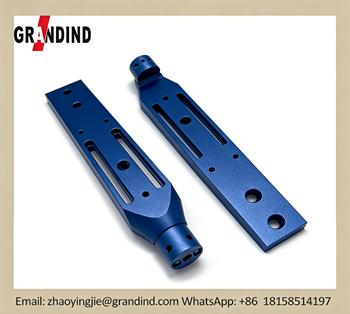 Why Choose CNC Machined Aluminum Blue Anodized Components?2026/11/05
Discover why CNC machined aluminum blue anodized components are ideal for precision industrial applications. Learn about machining, anodizing, material selection, quality control, and custom manufacturing solutions.
 How Does Custom Precision CNC Fixing Bracket Support Semiconductor Equipment Performance?2026/09/07
In semiconductor manufacturing, precision is not negotiable. The equipment used in wafer fabrication, inspection, and packaging demands components that maintain exact positioning under vacuum, thermal cycling, and continuous operation. Even microscopic deviations can compromise yield rates and produ......